
Building a squad in the TOP 14 is anything but improvised. Between strict regulations, financial pressure, sporting ambition, and fierce competition for talent, French clubs must assemble a team capable of performing at the highest level while navigating a highly constrained environment. Behind the headline signings and heated transfer windows lies a meticulous process where every position, every player, and every euro matters.
1. A regulated budget and a strict salary cap
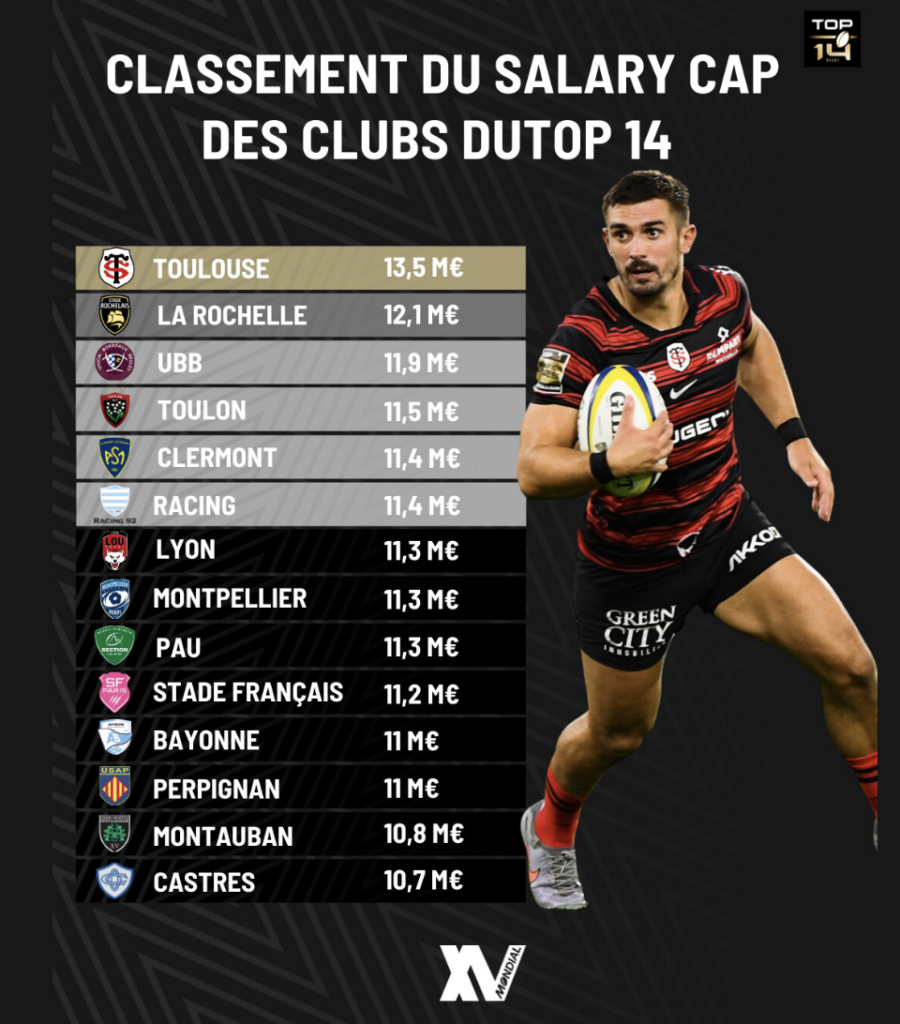
At the heart of squad construction is the salary cap, designed to prevent economic imbalances and limit wage inflation. In the TOP 14, it imposes a maximum combined salary for all professional players in a club. This forces managers to make tough decisions: keeping a superstar can sometimes cost as much as signing two high-quality players, and clubs must constantly assess these trade-offs.
The overall budget also shapes strategy. Some clubs rely heavily on developing homegrown talent to control costs, while others use their financial strength to attract established internationals. But all of them must present balanced finances to the league.
2. The central role of JIFF: a rule that shapes everything
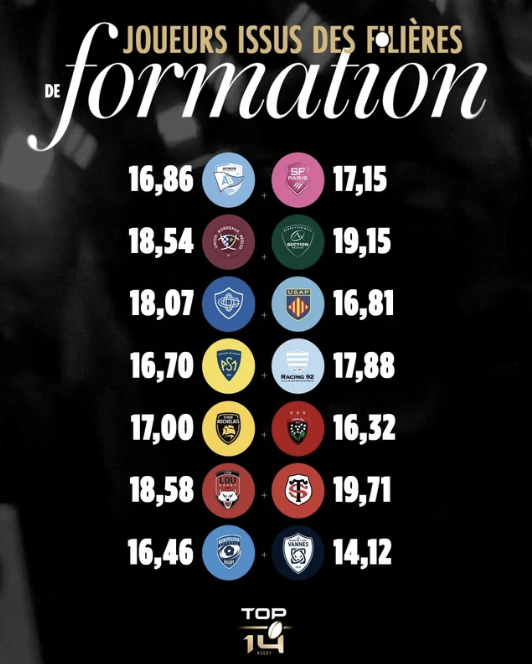
Another major constraint is the JIFF rule (Joueurs Issus des Filières de Formation), which requires clubs to field a minimum number of players trained in France on each match sheet. This regulation promotes domestic development and heavily influences recruitment choices.
As a result, a promising young JIFF player can sometimes be more valuable on the market than an experienced foreign international. Clubs therefore act early, securing their top prospects at 17 or 18 to avoid being caught short in future seasons.The picture is the average number of JIFF players during the 2024-25 TOP 14 season.
3. Long-term squad planning
A TOP 14 season is long, intense, and regularly disrupted by international call-ups. To build a balanced squad, coaching staffs analyze needs position by position while also planning around the calendar’s pressure points.
The objective is to:
- have a world-class starter in key positions,
- ensure a reliable backup is ready to step in during international breaks,
- and maintain continuity from season to season.
Most clubs plan their squads two to three years ahead, anticipating departures, contract renewals, and the development trajectory of academy players.
4. The transfer market: anticipation, negotiation, and competition
L’USAP recruit the best player of Super Rugby
Recruiting in the TOP 14 also means keeping a close eye on the international market. With competition from Super Rugby, the English Premiership, and the Japanese league, clubs battle fiercely for talent. Recruitment directors track players reaching the end of their contracts, analyze profiles through data, and liaise constantly with agents and other clubs.
Signings are not based solely on raw talent. Factors such as:
- personality and mindset,
- ability to fit into the club’s culture,
- injury history,
- and capacity to adapt to the physical demands of French rugby
are equally important criteria.
5. The academy: a strategic cornerstone
Ultimately, no TOP 14 club can achieve sustainable success without a strong academy. This is where future JIFF players, future starters, and sometimes future internationals are developed. Toulouse, La Rochelle, and Clermont illustrate this perfectly: a well-trained and well-integrated academy player can be more valuable than any big-name recruit.
Building a TOP 14 squad is therefore a delicate balance of financial discipline, regulatory constraints, sporting strategy, and long-term vision — an essential behind-the-scenes process that shapes every weekend’s performance.

Laisser un commentaire